
Dailies Total One Multifocal Fitting Guide: A Comprehensive Overview
This guide details fitting Dailies Total One Multifocal lenses, addressing presbyopia’s rise and utilizing advanced technologies like SimVis Gekko for optimal vision correction.
Understanding Presbyopia and Multifocal Contact Lenses
Presbyopia, a natural age-related vision change, reduces the eye’s ability to focus on near objects. As the global population ages, the prevalence of presbyopia is increasing significantly, demanding effective solutions. Multifocal contact lenses address this by providing clear vision at multiple distances – near, intermediate, and far.
Dailies Total One Multifocal lenses utilize water gradient technology, mimicking the eye’s natural tear film for exceptional comfort. These lenses correct presbyopia, offering a seamless visual experience for patients seeking alternatives to glasses.
The Rise of Multifocal Contact Lens Demand
The demand for multifocal contact lenses is surging, driven by an aging global population and increasing presbyopia prevalence. By next year, the worldwide incidence is expected to rise substantially. Patients are actively seeking comfortable, convenient vision correction options beyond traditional spectacles.
Dailies Total One Multifocal lenses cater to this growing need, offering a daily disposable option with water gradient technology. This boosts practitioner confidence in fitting and provides excellent visual acuity across all distances.
Dailies Total One Multifocal: Key Features & Benefits

Dailies Total One Multifocal stands out as the first and only monthly Water Gradient multifocal contact lens designed for exceptional comfort, feeling like nothing even at day 30. It delivers excellent visual acuity at all distances – near, intermediate, and far – leveraging Alcon’s proven technology.
The lens’s unique water gradient mimics the natural hydration of the cornea, promoting breathability and reducing end-of-day dryness, enhancing patient satisfaction and compliance.
Patient Selection Criteria
Successful multifocal lens fitting hinges on careful patient selection. Ideal candidates exhibit stable presbyopia, generally over 40, with moderate myopic or hyperopic refractive error. A comprehensive understanding of visual needs – near work, intermediate screen time, and distance vision – is crucial.
Practitioners must assess overall ocular health and patient motivation for contact lens wear to ensure optimal outcomes and minimize potential complications.
Identifying Suitable Candidates
Suitable candidates demonstrate consistent binocular vision and adequate tear film quality for comfortable lens wear. Moderate astigmatism is often manageable, but high levels may necessitate toric multifocal options. Patients actively seeking solutions for near and distance vision, tired of reading glasses, are prime candidates.
Lifestyle factors – extensive computer use, driving needs – significantly influence lens selection and add power determination, ensuring optimal visual performance.
Exclusion Criteria & Contraindications
Contraindications include unstable refractive error, significant ocular surface disease (severe dry eye), and active eye infections. Patients with certain systemic conditions, like uncontrolled diabetes, may be unsuitable due to impaired healing. Unrealistic expectations or poor compliance with lens care routines also warrant exclusion.
Careful consideration is needed for individuals with advanced glaucoma or macular degeneration, as multifocals may not address their specific visual needs effectively.
Initial Consultation & Refraction
A thorough patient history is crucial, detailing visual demands at all distances. Comprehensive refraction, including distance and near vision assessment, is essential. Monocular and binocular acuities must be recorded. Evaluate accommodative amplitude and pupil size.
Discuss lifestyle factors impacting vision, such as computer use and reading habits, to tailor the fitting approach. Accurate refraction forms the foundation for successful multifocal lens fitting.
Comprehensive Eye Examination
Perform a complete ocular health assessment, including evaluation of the cornea, conjunctiva, and anterior chamber. Assess tear film quality and quantity, as dryness can impact contact lens comfort. Measure corneal topography to rule out irregularities.
Evaluate binocular vision, including phoria and fusional ranges. Confirm the absence of pathology that could contraindicate contact lens wear. A healthy ocular surface is paramount for success.
Determining Add Power
Accurately ascertain the patient’s add power through subjective refraction, considering both distance and near corrections. Monocular add power determination is crucial, followed by binocular refinement. Utilize a near addition chart, and consider the patient’s visual demands.
Employ techniques like the minus build-up method to fine-tune the add power for optimal near vision. Over-refraction during diagnostic lens evaluation will further optimize the add.
Fitting Diagnostic Lenses
Select a range of diagnostic lenses encompassing various add powers and base curves to facilitate precise fitting. Begin with parameters closely matching the patient’s refraction and corneal curvature. Trial lens selection should prioritize comfort and initial visual acuity.
Employ over-refraction techniques to refine the add power and optimize visual performance at all distances. Careful assessment of lens centration and movement is vital for successful fitting.
Trial Lens Selection & Parameters
Initiate with a diagnostic set including +0.75D, +1;00D, +1.25D, and +1.50D add powers, alongside a range of base curves. Consider the patient’s spectacle add power as a starting point, adjusting based on lifestyle. Prioritize parameters that align with corneal topography.
Dailies Total One Multifocal offers a wide range, enabling tailored fitting. Document all parameters meticulously for consistent results and future reference.
Over-Refraction Techniques
Employ over-refraction to fine-tune visual acuity, particularly at near and intermediate distances. Start with +0.25D or +0.50D adjustments, observing the patient’s subjective response. Carefully balance distance and near vision, avoiding over-minusing or over-plussing.
SimVis Gekko can simulate these adjustments, predicting outcomes before lens changes. Document all over-refraction values for optimal patient outcomes.
Visual Acuity Assessment at Multiple Distances
Thoroughly evaluate visual acuity at distance, intermediate, and near, mirroring real-world demands. Utilize standardized charts at 40cm (near) and 60cm (intermediate). Employ 3D-VA metrics via SimVis Gekko, integrating acuity with patient visual needs for a comprehensive assessment.
Record monocular and binocular acuity at each distance, noting any discrepancies.
Utilizing 3D-VA Metrics (SimVis Gekko)
SimVis Gekko revolutionizes multifocal fitting by simulating lens performance and predicting visual outcomes. Its 3D-VA metric integrates visual acuity across distances, weighted by individual patient needs, offering a more holistic assessment than traditional methods.
This tool aids in optimizing add power and lens parameters, maximizing patient satisfaction and visual performance with Dailies Total One Multifocal lenses.
Near, Intermediate, and Distance Vision Evaluation
Comprehensive visual acuity testing at all distances is crucial. Assess distance vision for clarity, intermediate for computer use, and near for reading. Evaluate binocularity at each distance to identify any imbalances;
Patient feedback regarding clarity and comfort at various tasks informs lens selection and refinement, ensuring optimal vision with Dailies Total One Multifocal lenses.
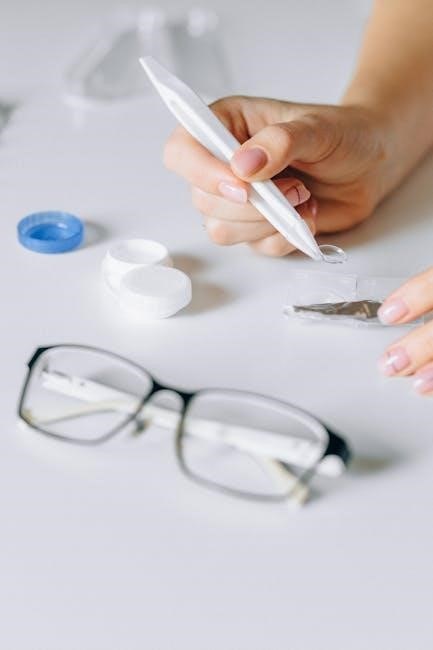
Lens Fitting & Evaluation
Post-lens insertion, carefully evaluate centration, movement, and overall comfort. Slit lamp biomicroscopy assesses lens fit, corneal health, and identifies any potential complications. Observe for adequate lid interaction and minimal edge lift.
Confirm proper oxygen transmission and hydration. Patient feedback on visual clarity and comfort guides necessary adjustments for a successful Dailies Total One Multifocal fitting.
Centration, Movement & Comfort Assessment
Evaluate lens centration to ensure alignment with the visual axis, minimizing off-axis aberrations. Assess lens movement with blinks, looking for adequate but not excessive movement for optimal oxygen flow.
Prioritize patient comfort; ask about any awareness or irritation. A comfortable fit promotes compliance and successful long-term wear of Dailies Total One Multifocal lenses.
Slit Lamp Biomicroscopy
Perform a thorough slit lamp examination to evaluate the cornea, conjunctiva, and lids for any abnormalities or signs of irritation. Assess the lens position, centration, and movement under magnification.
Check for any corneal staining or edema, indicating potential issues with oxygen permeability or lens fit. Document findings meticulously to track changes during follow-up visits.
Refinement & Optimization

Adjust add power in 0.25D increments based on patient feedback and visual performance at all distances. Fine-tune lens parameters, such as base curve and diameter, to optimize comfort and acuity.
Address patient complaints proactively, investigating issues like haloes or fluctuating vision. Utilize diagnostic sets to explore alternative parameters and achieve the best possible visual outcome.
Adjusting Add Power & Lens Parameters
Systematically modify add power in small increments – typically 0.25D – guided by patient responses during trial wear. Evaluate base curve and diameter adjustments to enhance centration and minimize aberrations.
Consider patient visual needs; prioritize distance, intermediate, or near vision based on lifestyle. Document all changes meticulously to track progress and optimize the final lens fit for lasting comfort.
Addressing Patient Complaints
Thoroughly investigate any reported issues like haloes, glare, or fluctuating vision. Re-evaluate refraction and lens parameters, considering potential over-minus or under-plus prescriptions.
Assess lens fit for centration, movement, and corneal health. Educate patients on adaptation periods and proper lens care. Document all complaints and resolutions for comprehensive patient management and future reference.
Utilizing Fitting Guides & Simulators
Leverage manufacturer fitting guides, like those for Air Optix Multifocal, as a starting point, but personalize based on individual needs. Employ visual simulators, such as SimVis Gekko, to predict lens performance and optimize parameters before dispensing.
These tools enhance fitting accuracy, especially with Water Gradient technology, and improve visual acuity at all distances, streamlining the process and boosting practitioner confidence.
Air Optix Multifocal Fitting Guide Considerations
While focusing on Dailies Total One Multifocal, referencing Air Optix Multifocal guides highlights the importance of initial over-refraction techniques. Remember to carefully assess add power and lens parameters, adapting recommendations to each patient’s unique visual demands.

Don’t solely rely on the guide; consider individual corneal topography and lifestyle factors for a truly customized fitting experience, maximizing comfort and visual clarity.
SimVis Gekko for Enhanced Fitting
Utilizing SimVis Gekko allows practitioners to replicate fitting guides virtually, improving multifocal contact lens assessments. This simulator aids in evaluating the feasibility of different lens parameters and predicting visual outcomes with a novel 3D-VA metric.
By integrating visual acuity across distances and patient needs, Gekko optimizes Dailies Total One Multifocal fittings, enhancing both accuracy and efficiency.
Troubleshooting Common Fitting Challenges
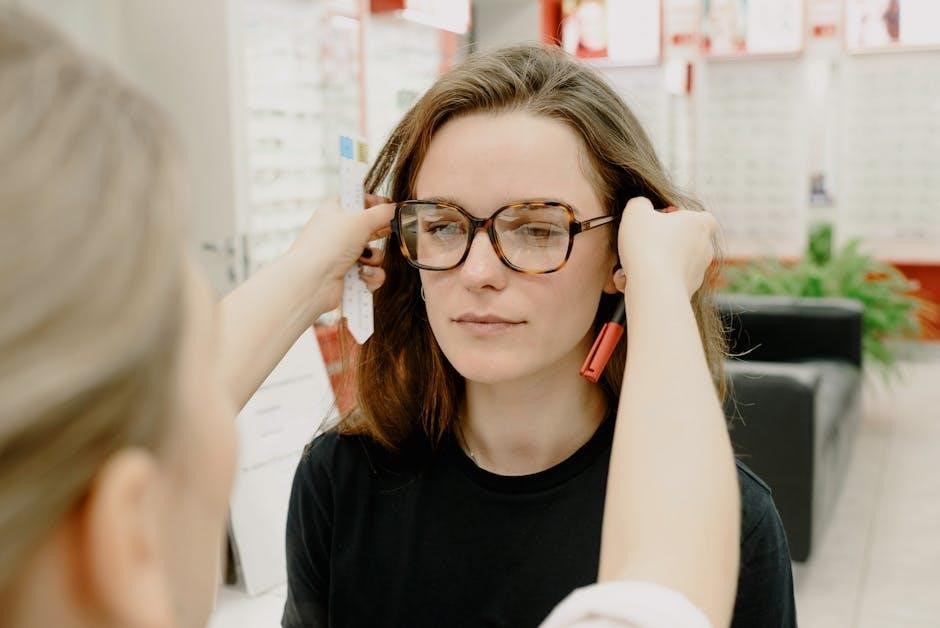
Addressing haloes and glare requires careful refraction and lens parameter adjustments, ensuring optimal centration and minimizing light scatter. Fluctuating vision often stems from inconsistent tear film or incorrect add power, necessitating thorough evaluation.

Practitioners should meticulously assess lens movement and comfort, refining the fit to resolve these issues and maximize patient satisfaction with Dailies Total One Multifocal lenses.
Haloes & Glare Management
Managing haloes and glare with Dailies Total One Multifocal necessitates a precise refraction, verifying accurate add power and spherical correction. Lens centration is crucial; decentration exacerbates these visual disturbances. Consider adjusting lens parameters, potentially reducing add power or altering the lens diameter.
Evaluate tear film quality, as dryness can amplify symptoms. Thorough patient education on lens care and environmental factors is also essential for optimal comfort and vision.
Fluctuating Vision Issues
Address fluctuating vision with Dailies Total One Multifocal by first confirming consistent lens wear and proper cleaning routines. Investigate tear film instability; dry eye significantly impacts visual clarity. Re-evaluate the add power and consider a slight adjustment, alongside a comprehensive refraction.
Assess for corneal irregularities or lid tightness. Ensure the patient understands the adaptation period and reports any persistent fluctuations promptly for re-evaluation.
Long-Term Follow-Up & Management
Schedule regular check-ups – at 3, 6, and 12 months – to monitor lens fit, visual acuity, and ocular health. Reinforce proper lens care compliance, emphasizing hygiene and solution usage. Educate patients about recognizing signs of complications, like redness or discomfort.
Document all follow-up visits and adjustments. Address any emerging issues promptly, ensuring continued comfort and optimal vision with Dailies Total One Multifocal.
Regular Check-Ups & Monitoring
Initial follow-up should occur within one to two weeks to assess adaptation and address any immediate concerns. Subsequent evaluations at three, six, and twelve months are crucial for long-term success. Monitor visual acuity at all distances, lens fit, and corneal health.

Evaluate patient comfort and compliance with lens care regimens. Document all findings meticulously to track progress and identify potential issues early.
Patient Education & Lens Care Compliance
Thorough patient education is paramount for successful wear. Explain proper handling, insertion, removal, and cleaning procedures using recommended solutions. Emphasize the importance of adhering to the prescribed wearing schedule and avoiding overnight wear.
Discuss potential complications and when to seek professional attention. Reinforce the link between compliance and optimal vision, comfort, and ocular health. Provide written instructions for reinforcement.
Technological Advancements in Multifocal Fitting
Dailies Total One Multifocal leverages Water Gradient Technology, mimicking the eye’s natural hydration for exceptional comfort, even at day 30. New materials enhance oxygen permeability and lens wettability, improving fitting success rates.
SimVis Gekko, alongside fitting guides, allows practitioners to visualize lens performance and optimize parameters. These advancements boost confidence in correcting presbyopia effectively.
Water Gradient Technology & Comfort
Dailies Total One Multifocal uniquely features Water Gradient Technology, transitioning from nearly 100% water at the surface to a core resembling the eye’s natural hydration. This creates exceptional breathability and reduces end-of-day dryness.

The result is a lens that feels like nothing, even after prolonged wear, enhancing patient comfort and compliance. This technology is pivotal for multifocal success.
Impact of New Materials on Fitting Success
Advanced materials in Dailies Total One Multifocal significantly improve fitting success, particularly for presbyopic patients. These materials enhance oxygen permeability, crucial for corneal health during extended wear.
Furthermore, the lens’s surface properties minimize deposits and maintain high wettability, contributing to consistent vision and comfort. Practitioners report increased confidence with these advancements.
Future Trends in Multifocal Contact Lens Fitting
Emerging techniques and webinar insights suggest a growing role for artificial intelligence in personalized multifocal lens fitting. AI algorithms can analyze patient data to predict optimal lens parameters, streamlining the process.
Additionally, expect further refinement of visual simulators like SimVis Gekko, enhancing diagnostic accuracy and improving patient outcomes with Dailies Total One Multifocal.
Webinar Insights & Emerging Techniques
Recent webinars highlight the importance of utilizing advanced fitting tools and understanding water gradient technology for Dailies Total One Multifocal lenses. Practitioners are exploring techniques to optimize visual acuity at all distances, focusing on individual patient needs.
Emerging methods emphasize comprehensive assessments and leveraging digital platforms for enhanced diagnostic precision and improved fitting success rates.
The Role of Artificial Intelligence
Artificial intelligence (AI) is poised to revolutionize multifocal contact lens fitting, particularly with Dailies Total One Multifocal. AI algorithms can analyze vast datasets of patient parameters and fitting outcomes to predict optimal lens choices.
This technology promises personalized fitting recommendations, streamlining the process and potentially improving first-fit success rates, enhancing both practitioner efficiency and patient satisfaction.