
Blueprint Balsa Wood Glider Plans PDF: A Comprehensive Guide
Embark on a rewarding journey into the world of model aviation! This guide details accessing and utilizing blueprint balsa wood glider plans PDF,
a fun and skillful project for builders of all ages.
Balsa wood gliders represent a classic and accessible entry point into the fascinating world of aerodynamics and model aircraft construction. These lightweight, unpowered aircraft rely on skillful design and precise building techniques to achieve graceful, sustained flight. Blueprint balsa wood glider plans PDF offer a fantastic resource for enthusiasts, providing detailed instructions to recreate iconic designs or even innovate your own.
The appeal lies in their simplicity; requiring minimal materials – primarily balsa wood, glue, and a sharp knife – yet offering a surprisingly complex learning experience. Building a glider from a plan fosters problem-solving skills, spatial reasoning, and an understanding of fundamental aerodynamic principles; It’s a project suitable for individuals and families alike, offering hours of creative enjoyment.
Why Balsa Wood? Properties and Advantages
Balsa wood is the material of choice for building gliders, and for good reason. Its exceptionally lightweight nature – among the lightest commercially available woods – is paramount for achieving sustained flight. Despite its low density, balsa possesses a surprisingly high strength-to-weight ratio, crucial for withstanding the stresses of flight.
Blueprint balsa wood glider plans PDF frequently specify balsa due to its ease of workability. It can be easily cut, shaped, and sanded with simple tools, making it ideal for both beginners and experienced builders. Furthermore, balsa is readily available and relatively inexpensive, contributing to the affordability of this hobby; Its porous nature also allows for easy gluing, ensuring strong and durable joints.
Understanding Glider Aerodynamics – Lift, Drag, and Thrust (Simplified)
Glider flight relies on a delicate balance of aerodynamic forces. Lift, generated by the wings’ shape, opposes gravity, keeping the glider airborne. Drag, resistance from the air, slows the glider down. Unlike powered aircraft, gliders lack thrust from an engine; they initially rely on a launch or tow to gain altitude and then convert potential energy into forward motion.
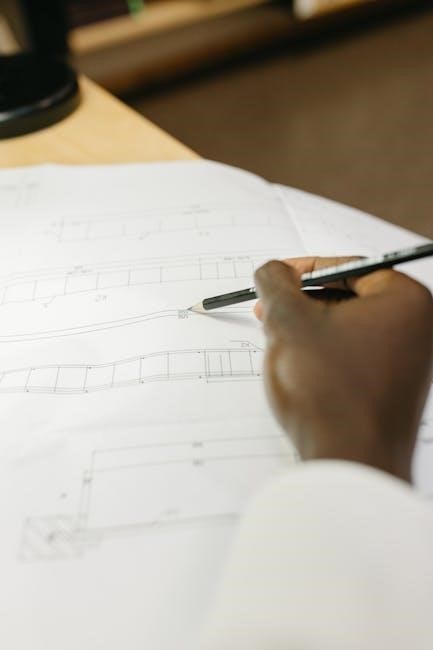
Blueprint balsa wood glider plans PDF implicitly incorporate these principles. Wing shape, size, and angle of attack are carefully designed to maximize lift and minimize drag. Understanding these basics, even in a simplified form, will greatly enhance your building and tuning success.
Essential Tools and Materials
Successfully building from blueprint balsa wood glider plans PDF requires a few key tools and materials. A sharp hobby knife or razor blade is crucial for precise cutting of balsa wood. Wood glue, specifically designed for balsa, provides strong and lightweight bonds. Sandpaper, in various grits, ensures smooth edges and surfaces.
Beyond these basics, a ruler, cutting mat, and pins or clamps are highly recommended. The plans themselves, printed clearly, are, of course, essential! Selecting the right balsa wood density and grain (discussed later) is also vital for optimal performance.
Balsa Wood Selection – Density and Grain
Choosing the correct balsa wood is paramount when working with blueprint balsa wood glider plans PDF. Balsa density is measured in pounds per cubic foot; lighter wood (2-3 lb/ft³) is ideal for wings, offering a good strength-to-weight ratio. Heavier wood (4-5 lb/ft³) suits the fuselage and areas needing more rigidity.
Grain also matters. Straight, even grain provides consistent strength. Avoid wood with knots or significant imperfections. Consider the plan’s recommendations; some designs specify densities for different parts. Experimenting with different densities can fine-tune glider performance;
Adhesives – Choosing the Right Wood Glue
Selecting the appropriate adhesive is crucial for successful construction using blueprint balsa wood glider plans PDF. Traditional wood glue (aliphatic resin) is a popular choice, offering strong bonds and easy cleanup with water. Cyanoacrylate (CA or “super glue”) provides rapid setting but can be brittle.
For balsa, a medium-viscosity CA glue works well for quick tacking, while wood glue ensures a more durable, flexible joint. Avoid excessive glue, as it adds weight. Ensure proper ventilation when using CA glue. Consider using pins or clamps during drying for a secure bond.
Cutting Tools – Hobby Knives, Razor Blades, and Safety
Precision cutting is essential when working with blueprint balsa wood glider plans PDF. A sharp hobby knife with replaceable blades is ideal for most cuts. Razor blades, used with a straight edge, offer clean, accurate results for larger pieces. Always prioritize safety!
Use a cutting mat to protect your work surface. Cut away from your body, and never apply excessive force. Retract blades when not in use. Consider wearing a safety glove on your guiding hand. Dull blades are more dangerous than sharp ones – replace them frequently!
Finding Free Blueprint Balsa Wood Glider Plans PDF Online
Accessing free plans for blueprint balsa wood glider plans PDF is surprisingly easy! Numerous websites cater to model aircraft enthusiasts, offering a diverse range of designs. However, plan quality varies significantly. Careful evaluation is crucial before committing to a build.
Look for plans with clear diagrams, detailed instructions, and a complete parts list. Understanding common plan symbols – representing wood grain direction, glue joints, and folding lines – will streamline the construction process. Prioritize plans that are well-documented and easy to interpret.
Popular Websites Offering Free Plans

Several online platforms host collections of blueprint balsa wood glider plans PDF. Outerzone is a prominent resource, boasting a vast library of vintage and modern designs. RC Groups forums often feature user-submitted plans and build logs, offering community support.
Additionally, websites dedicated to free model plans, like FreeModelPlans.org, provide a curated selection. Remember to always verify the source and scan downloaded files for potential security risks. Exploring these sites unlocks a world of gliding possibilities, catering to all skill levels.
Evaluating Plan Quality – Completeness and Clarity
When sourcing blueprint balsa wood glider plans PDF, assessing quality is crucial. A good plan includes detailed drawings of all components, a parts list with dimensions, and clear assembly instructions. Look for plans with well-defined lines and minimal ambiguity.

Completeness matters; ensure all necessary views are present. Clarity is key – can you easily understand how the parts fit together? Beware of plans with missing information or poorly rendered diagrams. Prioritizing well-documented plans saves frustration and ensures a successful build.
Understanding Plan Symbols and Terminology
Decoding blueprint balsa wood glider plans PDF requires familiarity with common symbols and terminology. Plans often use lines to indicate bend lines, grain direction, and glue surfaces. Look for symbols denoting specific wood thicknesses or airfoil shapes.
Terms like “span,” “chord,” “dihedral,” and “incidence” are frequently used. Understanding these terms is vital for accurate construction. A glossary accompanying the plan is helpful. Don’t hesitate to research unfamiliar terms online; mastering this language unlocks successful glider building;
Beginner-Friendly Glider Plan: The Simple Stick Glider
The simple stick glider is an ideal starting point for those new to balsa wood model building. Blueprint balsa wood glider plans PDF for this design are readily available online, emphasizing ease of construction. This model typically features a minimal parts count – a fuselage, wing, and tailplane – simplifying the build process.
It’s a fantastic introduction to basic aerodynamic principles. Building this glider requires only a hobby knife, wood glue, and patience. Expect a rewarding experience, learning fundamental skills before tackling more complex designs.
Step-by-Step Construction Guide
Begin by carefully cutting the balsa wood pieces according to your chosen blueprint balsa wood glider plans PDF. Gently sand the edges for a smooth finish. Apply a small amount of wood glue to join the fuselage halves, ensuring alignment. Next, attach the wing, maintaining a consistent angle as indicated in the plans.
Secure the tailplane, again using glue and checking for symmetry. Allow ample drying time for each joint. Finally, inspect the entire structure for any weak points and reinforce as needed. A well-built frame is crucial for successful flight!
Troubleshooting Common Building Issues
If your glider is nose-heavy, carefully add small amounts of weight to the tail, referencing your blueprint balsa wood glider plans PDF for balance points. Warped wings can be gently corrected with light misting of water and pinning them flat until dry. Glue failures often stem from insufficient drying time or poor surface contact – re-glue and clamp.
Asymmetrical builds cause turning issues; double-check alignment. Fragile sections benefit from reinforcing with extra balsa strips. Remember patience is key; address issues incrementally for optimal results!
Intermediate Glider Plan: The Classic Delta Wing Glider
The delta wing glider, a step up from basic designs, offers enhanced stability and gliding performance. Utilizing blueprint balsa wood glider plans PDF, construction involves precise cutting and assembly of the distinctive triangular wing. Pay close attention to dihedral angles, crucial for roll stability.
Reinforced leading edges are vital for durability. This plan demands more accurate shaping and alignment than simpler models. Mastering this build provides a solid foundation for tackling more complex designs, improving your skills significantly.
Detailed Assembly Instructions
Begin by carefully cutting out all components from balsa wood, referencing your blueprint balsa wood glider plans PDF. Assemble the fuselage first, ensuring straight alignment using a flat surface. Next, attach the wings, meticulously checking for correct dihedral angle – typically 2-3 degrees.
Apply wood glue sparingly to joints, clamping gently until dry. Reinforce wing roots with small fillets of glue for added strength. Finally, attach the tail surfaces, ensuring they are perfectly aligned. Double-check all connections before allowing the glue to fully cure.
Wing Shaping and Airfoil Considerations
Understanding airfoil shape is crucial for glider performance, as detailed in your blueprint balsa wood glider plans PDF. Slightly rounding the leading edge and tapering the trailing edge improves lift. Sand the wing surfaces smoothly, maintaining the intended airfoil profile.

Consider undercamber – a gentle curve on the wing’s underside – to enhance lift at lower speeds. Avoid sharp edges, as they create turbulence. Precise shaping, guided by the plans, directly impacts stability and glide ratio. Consistent sanding across both wings is vital for balanced flight.
Advanced Glider Plan: The Scale Glider (e.g., Piper Cub)
Scaling a detailed plan, like a Piper Cub from a blueprint balsa wood glider plans PDF, demands precision. Material thickness adjustments are vital; heavier balsa may be needed for larger spans. Accurate scaling ensures proportional dimensions, maintaining the aircraft’s aesthetic and aerodynamic qualities.
Adding realistic details – such as simulated panel lines or a cockpit – enhances the model’s appearance. Careful construction is key, as complexity increases. Refer to the plans frequently, ensuring each component aligns with the overall design.

Scaling Plans and Material Adjustments
Successfully scaling a blueprint balsa wood glider plans PDF requires careful calculation. Determine the desired wingspan and calculate the scaling factor. Adjust all dimensions proportionally, ensuring accurate representation. Consider balsa density; larger models necessitate stronger, potentially heavier, balsa wood.
Material thickness must also be adjusted. Increase thickness for spars and leading edges to maintain structural integrity. Account for weight distribution; heavier materials impact the glider’s center of gravity. Precise adjustments are crucial for optimal flight performance.
Adding Detail and Realism
Elevate your scale glider beyond basic construction by incorporating realistic details. Carefully add features like simulated panel lines using a fine-tipped marker or light engraving. Construct a cockpit with a miniature pilot figure for enhanced realism. Consider adding decals replicating authentic aircraft markings.
Shape the fuselage to accurately reflect the original aircraft’s contours. Pay attention to small details like antenna masts and landing gear struts. These enhancements, while time-consuming, dramatically improve the model’s aesthetic appeal and overall authenticity.
Glider Tuning and Adjustment
Achieving optimal flight performance requires meticulous glider tuning and adjustment. Begin by adjusting the center of gravity (CG); a slightly forward CG generally improves stability. Experiment with dihedral – increasing the wing angle enhances stability, while decreasing it improves maneuverability.
If your glider features control surfaces, make small adjustments to the elevator for pitch control. Minor rudder adjustments can correct yaw. Test glide frequently, making incremental changes until the glider flies smoothly and predictably. Patient tuning is key to unlocking your glider’s full potential.
Center of Gravity (CG) Adjustment
Precisely locating the center of gravity (CG) is crucial for stable flight. Refer to your blueprint balsa wood glider plans PDF for the specified CG location, usually indicated as a percentage of the wing chord. To adjust the CG, add small weights (clay or lead) to the nose or tail.
A forward CG typically results in a stable, but less maneuverable, glider. A rearward CG increases maneuverability but can lead to instability and stalls. Test glide after each adjustment, observing the glider’s behavior until balanced flight is achieved.
Dihedral and Wing Angle Optimization
Dihedral, the upward angle of the wings, significantly impacts stability. Consult your blueprint balsa wood glider plans PDF for the recommended dihedral angle. Increasing dihedral enhances stability, making the glider self-correcting during flight. Decreasing it improves maneuverability but can reduce stability.

Wing angle optimization, or incidence, affects lift and glide performance. Subtle adjustments to the wing angle can fine-tune the glider’s flight characteristics. Experiment cautiously, making small changes and test-gliding to observe the effects on stability and distance.
Control Surface Adjustments (if applicable)
If your blueprint balsa wood glider plans PDF includes control surfaces like a rudder or elevator, precise adjustments are crucial. Slightly bending the trailing edge of these surfaces alters airflow, impacting flight direction. A bent-up elevator causes the glider to climb, while a bent-down elevator causes it to dive.
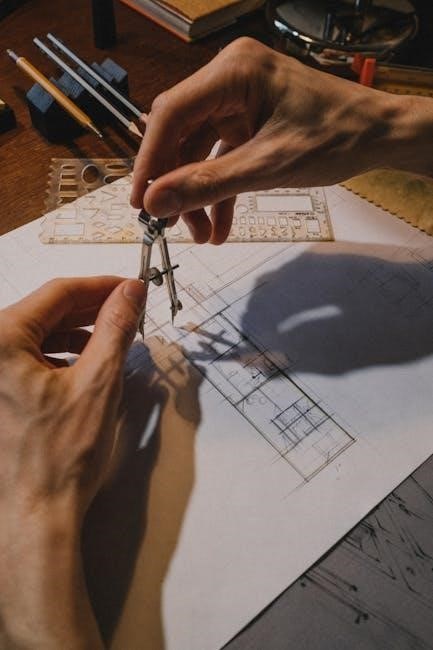
Rudder adjustments control yaw – side-to-side movement. Small deflections are usually sufficient; excessive adjustments can induce instability. Always test-glide after each adjustment to observe the effect and avoid overcorrection. Refer to the plans for specific guidance.
Safety Precautions When Building and Flying
Building from blueprint balsa wood glider plans PDF requires caution. Always use a sharp hobby knife with care, employing a cutting mat and keeping fingers clear of the blade. Wear safety glasses to protect your eyes from flying debris. Work in a well-ventilated area when using adhesives, following the manufacturer’s instructions.
When flying, choose a large, open space free from obstacles like trees and power lines. Never fly near people or roads. Be mindful of wind conditions; strong winds can carry the glider far away. Avoid flying in wet conditions as balsa wood weakens when wet.
Resources for Further Learning
Expanding your knowledge beyond blueprint balsa wood glider plans PDF is easy! Balsa wood glider clubs and communities offer invaluable support, shared experiences, and building tips. Online forums, like those on RC Groups, provide a platform for asking questions and showcasing projects.
Numerous tutorials on YouTube demonstrate building techniques and aerodynamic principles. Websites dedicated to model aviation often host detailed articles and plans. Consider joining a local model airplane club for hands-on guidance and camaraderie. Continuous learning will elevate your glider building skills!
Balsa Wood Glider Clubs and Communities
Connecting with fellow enthusiasts is a fantastic way to enhance your experience with blueprint balsa wood glider plans PDF. Local clubs often host building workshops, flying events, and offer mentorship for beginners. These communities provide a supportive environment to share knowledge and troubleshoot challenges.
National organizations, like the Academy of Model Aeronautics (AMA), offer resources, insurance, and promote safe flying practices. Online forums and social media groups dedicated to balsa gliders facilitate discussions and plan sharing. Networking with experienced builders accelerates your learning curve!
Online Forums and Tutorials
The internet is a treasure trove of information for those working with blueprint balsa wood glider plans PDF. Numerous online forums are dedicated to model aircraft, offering build logs, troubleshooting advice, and plan discussions; YouTube channels provide step-by-step video tutorials, visually demonstrating construction techniques and tuning procedures.
Websites specializing in model aviation often host articles and guides covering everything from balsa selection to aerodynamic principles. Interactive forums allow you to ask questions and receive feedback from experienced builders. Leveraging these resources significantly simplifies the building process!
Where to Purchase Balsa Wood and Supplies
Sourcing quality materials is crucial when working with blueprint balsa wood glider plans PDF. Hobby shops, both local and online, are excellent starting points, offering a wide selection of balsa wood in various densities and thicknesses. Specialty online retailers cater specifically to model aircraft enthusiasts, providing adhesives, covering materials, and tools.
Consider websites like Balsa USA and Aircraft Spruce for comprehensive inventories. Amazon also carries a range of balsa wood and supplies. Comparing prices and shipping costs is recommended to secure the best deals for your glider building project!