Come Thou Fount of Every Blessing: A Comprehensive Overview
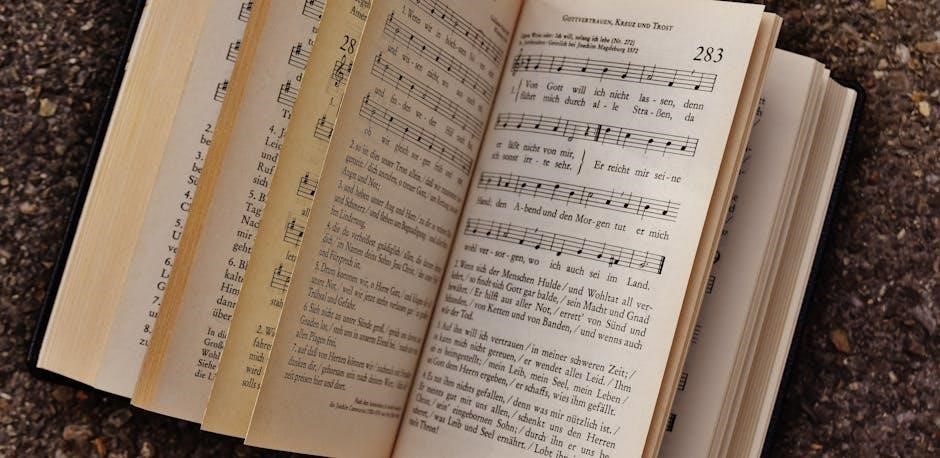
Come Thou Fount of Every Blessing sheet music is readily available as a PDF from sources like songsandhymns.org and hymnary.org.
These PDF versions‚ published in 2008 and 2013 respectively‚ showcase the hymn’s text by Robert Robinson (1758) and traditional American melody.

Historical Context of the Hymn

“Come Thou Fount of Every Blessing” emerged during a significant period of religious revivalism in the 18th century‚ specifically within the Calvinistic Methodist movement. The hymn’s origins are deeply rooted in the First Great Awakening‚ a Protestant religious revival that swept through the American colonies and Great Britain.
Robert Robinson‚ the hymn’s author‚ was a key figure in this movement‚ initially a fervent follower of George Whitefield. The PDF sheet music available today reflects a hymn born from personal spiritual struggle and eventual conversion. The hymn’s themes of grace‚ redemption‚ and the longing for a closer relationship with God resonated powerfully with those experiencing the emotional intensity of the Awakening.
The PDF versions from sources like songsandhymns.org and hymnary.org preserve a piece of this historical context‚ allowing modern audiences to connect with the devotional fervor of the 1750s. The hymn’s enduring popularity speaks to the timelessness of its message and its ability to articulate the universal human experience of seeking divine grace.
Robert Robinson: The Hymn’s Author
Robert Robinson (1735-1790) was a British hymn writer and Baptist minister whose life dramatically influenced the creation of “Come Thou Fount of Every Blessing.” Initially drawn to the radical preaching of George Whitefield‚ Robinson experienced a profound conversion‚ which he later documented in his autobiography. This personal journey of faith is vividly reflected in the hymn’s heartfelt lyrics‚ readily available in PDF format.
The PDF sheet music available online showcases a work born from Robinson’s own spiritual struggles and triumphs. He became a prominent figure in the Calvinistic Baptist community‚ known for his eloquent sermons and poetic gifts. However‚ later in life‚ Robinson experienced periods of doubt and strayed from his earlier convictions.
Despite these challenges‚ “Come Thou Fount” remains his most enduring legacy. The hymn‚ preserved in PDF versions from sites like songsandhymns.org and hymnary.org‚ continues to inspire and uplift generations with its powerful message of grace and redemption‚ a testament to Robinson’s lasting impact.
The Year of Composition: 1758
The year 1758 marks the genesis of “Come Thou Fount of Every Blessing‚” penned by Robert Robinson. This was a period of significant religious revivalism‚ particularly within the Calvinistic Baptist circles Robinson frequented. The hymn’s creation wasn’t a detached artistic endeavor‚ but rather a deeply personal expression of his newfound faith‚ now accessible through numerous PDF versions online.
The PDF sheet music readily found on platforms like songsandhymns.org and hymnary.org represents a snapshot of this era. Robinson‚ having recently experienced conversion‚ poured his emotions and theological understanding into the lyrics. 1758 was a pivotal year for him‚ solidifying his commitment to the Baptist ministry.
The enduring popularity of the hymn‚ evidenced by its continued availability in PDF format‚ speaks to the timelessness of its message. It’s a reminder that even centuries later‚ Robinson’s 1758 composition continues to resonate with believers seeking grace and redemption.
Early Influences on Robinson’s Writing
Robert Robinson’s literary style‚ culminating in the beloved hymn now widely available as a PDF‚ was shaped by several key influences. His upbringing within a working-class family and early exposure to dissenting religious communities fostered a pragmatic yet deeply spiritual worldview; These influences are subtly present even within the PDF sheet music’s lyrical content.
Furthermore‚ Robinson’s apprenticeship as a printer exposed him to a wide range of literary works‚ honing his skill with language and verse. He was particularly drawn to the poetry of Isaac Watts‚ a prominent hymn writer whose work likely served as a model. Accessing the hymn’s PDF allows a close examination of Robinson’s stylistic choices.

His conversion experience‚ preceding the hymn’s composition‚ profoundly impacted his writing‚ infusing it with a raw emotional honesty. The readily available PDF versions from sites like songsandhymns.org and hymnary.org showcase this sincerity.
The Original Lyrics and Their Meaning
The original lyrics of “Come Thou Fount‚” easily accessible in PDF format from resources like songsandhymns.org and hymnary.org‚ are rich with theological depth and personal reflection. Robinson’s verses express a profound sense of dependence on God’s grace‚ acknowledging human frailty and the constant need for redemption.

Phrases like “streams of mercy” and “seal my heart to Thy love” convey a longing for a deep‚ abiding relationship with the divine. The hymn’s PDF reveals a journey from recognizing sin (“prone to wander”) to seeking forgiveness and restoration. The imagery of a “fount” symbolizes an inexhaustible source of blessing.
Examining the PDF sheet music alongside the lyrics highlights the interplay between words and melody‚ enhancing the emotional impact. The hymn’s enduring appeal lies in its honest portrayal of the Christian experience – a struggle between faith and doubt‚ and a reliance on God’s unwavering grace.
The Evolution of the Hymn’s Text

While the core message of “Come Thou Fount” remains consistent‚ examining PDF versions from sources like songsandhymns.org and hymnary.org reveals subtle textual variations over time. Robert Robinson penned the original lyrics in 1758‚ but subsequent editions have included minor alterations and adjustments.
Hymnary.org’s PDF specifically notes the hymn as “Robert Robinson‚ 1758‚ alt.” indicating these changes. These alterations often involve phrasing or word choice‚ aiming for clarity or improved poetic flow. However‚ the fundamental theological themes of grace‚ redemption‚ and the struggle with sin remain central.
Comparing different PDF versions allows tracing the hymn’s textual journey. These variations demonstrate the dynamic nature of hymnody‚ where texts evolve through usage and adaptation. Despite these changes‚ the hymn’s enduring power continues to resonate with congregations worldwide‚ as evidenced by its continued presence in modern PDF collections.
John Wyeth’s Repository of Sacred Music
John Wyeth’s Repository of Sacred Music‚ particularly Part Second from 1813‚ is crucial to the history of “Come Thou Fount.” Both songsandhymns.org and hymnary.org PDF sheet music versions explicitly credit Wyeth’s Repository as the source of the hymn’s traditional American melody.
This collection played a pivotal role in popularizing the hymn beyond its initial publication. Wyeth’s work focused on providing accessible and singable tunes for congregational worship‚ and “Come Thou Fount” became a prominent feature. The PDF scores available today are direct descendants of these arrangements.
The Repository’s influence extended throughout the 19th and 20th centuries‚ solidifying the melody’s association with Robinson’s lyrics. Accessing the hymn’s PDF allows appreciation of Wyeth’s contribution to its enduring legacy‚ showcasing how musical arrangement shapes a hymn’s reception and longevity.
The Melody and Its Origins (1813)
The melody associated with “Come Thou Fount” wasn’t original to the hymn’s 1758 lyrics. It emerged in 1813 through John Wyeth’s Repository of Sacred Music‚ becoming the tune most recognized today. Both songsandhymns.org and hymnary.org PDF sheet music versions confirm this origin.
Wyeth compiled and arranged tunes‚ often adapting existing melodies for congregational singing. The specific melody chosen for “Come Thou Fount” resonated with the hymn’s emotional depth and theological themes. The PDF scores demonstrate a simple‚ yet profoundly moving‚ musical structure.
Prior to 1813‚ Robinson’s lyrics were likely sung to various tunes. Wyeth’s arrangement standardized the musical setting‚ contributing significantly to the hymn’s widespread adoption. Examining the PDF reveals a melody perfectly suited to convey the hymn’s message of grace‚ redemption‚ and reliance on God.
Traditional American Melody Characteristics
The melody of “Come Thou Fount‚” as presented in the PDF sheet music from sources like songsandhymns.org and hymnary.org‚ embodies characteristics typical of traditional American hymnody. It’s largely diatonic‚ meaning it primarily uses notes within a standard scale‚ creating a familiar and accessible sound.
The tune features a relatively narrow melodic range‚ making it easy for congregants to sing. This simplicity is a hallmark of early American sacred music‚ designed for participation rather than virtuosity. The PDF scores reveal a clear‚ stepwise motion in the melody‚ avoiding large leaps.
Furthermore‚ the rhythm is straightforward and predictable‚ contributing to the hymn’s singability. The melody’s structure complements the lyrical phrasing‚ enhancing the emotional impact of Robinson’s words. These characteristics‚ evident in the PDF‚ helped establish “Come Thou Fount” as a beloved standard.
Public Domain Status and Usage Rights
“Come Thou Fount of Every Blessing” exists firmly within the public domain‚ a crucial detail confirmed by the PDF resources available on platforms like hymnary.org. This means the hymn’s text‚ penned by Robert Robinson in 1758‚ and the traditional American melody‚ popularized through John Wyeth’s 1813 publication‚ are free from copyright restrictions.
Consequently‚ the PDF sheet music can be freely downloaded‚ reproduced‚ and distributed for both personal and congregational worship without seeking permission or paying royalties. Hymnary.org explicitly states this permission‚ requesting only attribution when the score is reproduced.
This open access fosters widespread use in various settings‚ from church services to personal devotional practices. The public domain status ensures the hymn’s enduring legacy‚ allowing it to be shared and enjoyed by generations to come‚ as easily accessible through its PDF versions.
Availability of the PDF Sheet Music
PDF sheet music for “Come Thou Fount of Every Blessing” is remarkably accessible online‚ catering to musicians and worship leaders alike. Two prominent sources offer downloadable versions: songsandhymns.org and hymnary.org. Songsandhymns.org provides a PDF published on October 4‚ 2008‚ displaying the hymn’s classic arrangement.
Hymnary.org offers another PDF version‚ dated May 28‚ 2013‚ which includes the text by Robert Robinson (1758) and acknowledges the tune’s origins in John Wyeth’s 1813 “Repository of Sacred Music.” Both PDFs present the musical notation and lyrics‚ facilitating performance and study.
These digital resources ensure the hymn remains readily available for individuals and congregations‚ promoting its continued use in worship and musical expression. The ease of access to these PDF versions contributes significantly to the hymn’s enduring popularity.
Sources for Downloading “Come Thou Fount” PDF
For those seeking to download “Come Thou Fount of Every Blessing” in PDF format‚ two reliable online resources stand out: songsandhymns.org and hymnary.org. Songsandhymns.org offers a readily available PDF‚ initially published on October 4‚ 2008‚ presenting the hymn’s traditional arrangement and lyrics penned by Robert Robinson in 1758.
Alternatively‚ hymnary.org provides a PDF version dated May 28‚ 2013‚ clearly attributing the text to Robinson and the melody to John Wyeth’s 1813 “Repository of Sacred Music.” Both websites offer free downloads‚ making the sheet music accessible for personal or congregational use.
Hymnary.org specifically notes the hymn is in the public domain‚ granting permission for reproduction with proper attribution. These sources ensure convenient access to the PDF‚ supporting the hymn’s continued performance and appreciation.
Songsandhymns.org PDF Analysis
The PDF version of “Come Thou Fount of Every Blessing” available on songsandhymns.org‚ published October 4‚ 2008‚ presents a straightforward and clean sheet music layout. It clearly displays the melody and lyrics‚ attributed to Robert Robinson (1758) and the traditional American melody originating from John Wyeth’s 1813 publication.
The notation is easily readable‚ suitable for both vocalists and instrumentalists. The PDF includes standard musical symbols and time signatures‚ facilitating accurate performance. The document’s formatting prioritizes clarity‚ making it user-friendly for musicians of varying skill levels.
Notably‚ the songsandhymns.org PDF doesn’t include extensive historical context or theological analysis; its focus remains solely on providing accessible sheet music. This makes it an ideal resource for quick access to the hymn’s arrangement for practice or performance purposes.
Hymnary.org PDF Analysis
The PDF of “Come Thou Fount of Every Blessing” hosted on Hymnary.org‚ dated May 28‚ 2013‚ offers a visually appealing and detailed presentation of the hymn. It credits Robert Robinson for the 1758 lyrics and acknowledges the tune’s origin in J. Wyeth’s 1813 Repository of Sacred Music.
Unlike the songsandhymns.org version‚ Hymnary.org explicitly states the hymn is in the public domain‚ granting users freedom for personal and congregational worship. They request attribution if the score is reproduced. The notation is clear and well-spaced‚ enhancing readability for musicians.
Hymnary.org’s PDF also provides a link to the hymn’s textual information on their website‚ offering further research opportunities. This resource is particularly valuable for those seeking a legally accessible and well-documented version of the beloved hymn‚ complete with usage rights information.
The Hymn’s Theological Themes
Though a PDF provides the musical notation‚ “Come Thou Fount” resonates deeply with core Christian theological concepts. The hymn centers on the overwhelming grace of God‚ portraying Him as the source of every blessing – a foundational tenet of Protestant theology.
Redemption is powerfully expressed through imagery of being “bound” by God’s love and “sealed” by His blood‚ referencing the sacrificial atonement of Jesus Christ. The lyrics acknowledge the ongoing struggle with sin‚ a universal human experience‚ and the desperate need for forgiveness.
The plea to “wash me” and “cleanse me” reflects a yearning for spiritual renewal. The hymn doesn’t shy away from acknowledging human frailty‚ but firmly anchors hope in God’s unwavering faithfulness. Even the PDF sheet music serves as a conduit to these profound spiritual truths.
Grace as a Central Theme
The hymn “Come Thou Fount” profoundly emphasizes God’s grace as the wellspring of all blessings‚ a theme readily apparent even within a simple PDF rendition of the sheet music. The opening lines immediately establish this focus‚ directly addressing God as the “fount of every blessing.”
This isn’t a hymn about human achievement or worthiness; it’s a humble acknowledgment of unmerited favor. The lyrics repeatedly highlight receiving grace – being “prone to wander‚” yet being safely “brought” back by divine intervention.
The concept of grace extends beyond mere forgiveness‚ encompassing guidance‚ preservation‚ and the provision of hope. The PDF‚ while presenting the notes and words‚ can’t fully capture the emotional weight of this central theological idea. It’s a gift freely given‚ a constant source of strength‚ and the foundation of the believer’s relationship with God.
The Concept of Redemption in the Lyrics
The lyrics of “Come Thou Fount” powerfully illustrate the concept of redemption‚ a theme visible even when examining a PDF of the hymn’s sheet music. The song portrays a journey from spiritual wandering and sinfulness to being securely “bound” to Christ by His love.
The imagery of being “prone to wander” acknowledges the inherent human tendency towards straying from God’s path. However‚ the plea to be “kept” and the reference to a “covenant sealed” demonstrate a desire for‚ and belief in‚ God’s redeeming work.
The “streams of mercy” mentioned aren’t simply acts of kindness‚ but represent the cleansing and restorative power of God’s grace‚ washing away sin and offering a new beginning. Even a basic PDF version reveals the lyrical progression from acknowledging weakness to embracing the hope of complete restoration through divine intervention.
The Struggle with Sin and the Need for Forgiveness
“Come Thou Fount” profoundly acknowledges the internal struggle with sin and the desperate need for forgiveness‚ a sentiment readily apparent even within a simple PDF of the hymn’s lyrics. The famous line‚ “prone to wander—Lord‚ I feel it‚” encapsulates the human condition – a constant pull away from God’s grace.
This isn’t a denial of faith‚ but a raw‚ honest confession of weakness. The hymn doesn’t shy away from admitting the inclination towards error and the resulting spiritual distance. The plea for God to “bind my wandering heart to Thine” isn’t a request for perfection‚ but for sustained strength against temptation.
Examining a PDF sheet music version highlights how the lyrical content emphasizes reliance on divine mercy‚ recognizing that self-effort alone is insufficient to overcome sin’s grip. The song’s enduring appeal lies in its relatable portrayal of this universal human experience.
Modern Interpretations and Usage
Today‚ “Come Thou Fount” remains remarkably relevant‚ frequently appearing in contemporary worship settings‚ easily accessible through numerous PDF versions online. Its themes of grace‚ redemption‚ and dependence on God resonate across denominations.
Modern interpretations often feature varied arrangements – from stripped-down acoustic performances to more elaborate orchestrations. Many artists have recorded their own versions‚ demonstrating the hymn’s adaptability. A quick search for “Come Thou Fount PDF” reveals countless arrangements catering to different musical tastes.
The hymn’s enduring popularity stems from its lyrical depth and theological richness. It’s not simply a historical artifact; it’s a living expression of faith‚ continually reinterpreted and re-experienced by new generations. The availability of PDF sheet music ensures its continued accessibility for musicians and congregations alike.
Contemporary Worship Settings
“Come Thou Fount” frequently graces contemporary worship services‚ bridging traditional hymnody with modern musical styles. The readily available PDF sheet music facilitates its inclusion in diverse arrangements‚ from piano-led accompaniment to full band performances.
Many churches utilize the hymn as a focal point for communal confession and praise‚ its lyrics prompting introspection and a renewed focus on God’s grace. Contemporary worship leaders often incorporate it into blended services‚ pairing it with modern songs that explore similar themes.
The accessibility of PDF versions allows worship teams to easily adapt the hymn to their specific instrumentation and vocal arrangements. It’s common to hear updated harmonies and rhythmic variations‚ while still retaining the hymn’s core message and melodic beauty. Its timeless message continues to resonate deeply within modern congregations.
Arrangements and Variations of the Hymn
The widespread availability of “Come Thou Fount” as a PDF has spurred a wealth of arrangements and variations. Musicians frequently adapt the hymn for solo piano‚ guitar‚ or vocal ensembles‚ showcasing its melodic versatility.
Contemporary arrangements often incorporate modern harmonies and rhythmic patterns‚ while maintaining the hymn’s core structure; Instrumental versions‚ featuring strings‚ woodwinds‚ or brass‚ are also popular‚ offering a fresh perspective on the familiar tune.
Many artists have created acoustic renditions‚ stripping the hymn down to its essential elements‚ emphasizing its lyrical depth. The PDF format allows for easy transposition and customization‚ enabling musicians to tailor the hymn to their specific vocal ranges and instrumental capabilities. These variations demonstrate the hymn’s enduring appeal and adaptability across genres.
Cultural Impact and Legacy
“Come Thou Fount” transcends denominational boundaries‚ becoming a beloved hymn across various Christian traditions. Its accessibility‚ partly due to readily available PDF sheet music from sites like songsandhymns.org and hymnary.org‚ has cemented its place in congregational worship.
The hymn’s themes of grace‚ redemption‚ and the struggle with sin resonate deeply with listeners‚ fostering a sense of communal reflection. Its enduring popularity is evidenced by countless recordings and performances‚ spanning diverse musical styles.
The PDF format has facilitated its transmission and preservation‚ ensuring its continued relevance for future generations. Beyond religious contexts‚ the hymn’s poignant lyrics have found expression in literature and popular culture‚ solidifying its status as a cultural touchstone. It remains a powerful expression of faith and a testament to the enduring power of hymnody.
The Hymn’s Enduring Popularity
The sustained appeal of “Come Thou Fount” stems from its profoundly relatable lyrics and a universally resonant melody. The easy availability of the hymn as a PDF – found on platforms like songsandhymns.org and hymnary.org – has undoubtedly contributed to its widespread use.
Its themes of grace‚ forgiveness‚ and dependence on God continue to speak to the human condition across generations. The hymn’s simplicity allows for diverse musical arrangements‚ from traditional choral settings to contemporary interpretations‚ broadening its reach.

The PDF sheet music enables musicians and congregations alike to easily access and perform the hymn‚ fostering a sense of connection and shared worship. Its enduring presence in hymnals and online resources ensures its continued transmission‚ solidifying its legacy as a timeless classic.
Notable Recordings and Performances
While a comprehensive catalog is extensive‚ numerous artists have offered compelling renditions of “Come Thou Fount.” Access to the hymn’s PDF sheet music‚ readily available from sites like songsandhymns.org and hymnary.org‚ has facilitated countless performances.
Contemporary Christian artists frequently include the hymn in their albums and live concerts‚ often with modern arrangements. Traditional choirs and vocal ensembles also regularly feature it in their repertoire‚ preserving the hymn’s classic sound.
Many independent musicians share their interpretations online‚ leveraging the easily accessible PDF format to learn and perform the piece. These recordings span a wide range of styles‚ demonstrating the hymn’s adaptability and enduring appeal. The hymn’s presence in various contexts underscores its continued relevance and widespread appreciation.
Further Research Resources
For deeper exploration‚ several online resources provide valuable information about “Come Thou Fount.” Hymnary.org is a comprehensive database offering historical context‚ textual variations‚ and links to related hymns. Accessing the hymn’s PDF sheet music on this site also reveals publication details.
Songsandhymns.org provides another readily available PDF version‚ alongside insights into the hymn’s composition and usage. Online hymn databases and archives‚ such as the Digital Hymnbook‚ offer further scholarly articles and analyses.
Researchers can also explore biographical information about Robert Robinson‚ the hymn’s author‚ and John Wyeth‚ associated with the melody. Examining historical collections of sacred music from the 18th and 19th centuries will reveal the hymn’s evolution and cultural impact; These resources collectively offer a rich understanding of this beloved hymn.
Online Hymn Databases and Archives
Numerous online platforms serve as invaluable repositories for hymn-related research‚ including readily accessible PDF sheet music for “Come Thou Fount.” Hymnary.org stands out as a premier resource‚ offering detailed historical data‚ textual analyses‚ and downloadable PDF scores. Its extensive catalog allows for comparative study of different arrangements.
Songsandhymns.org provides another convenient source for obtaining the hymn’s PDF‚ alongside contextual information about its origins and author‚ Robert Robinson. The Digital Hymnbook and similar archives contain digitized collections of historical hymnbooks‚ revealing the hymn’s evolution.
These databases facilitate exploration of variant lyrics and melodies‚ tracing the hymn’s journey through time. Researchers can also find scholarly articles and commentaries‚ enriching their understanding of its theological and cultural significance.